
Home fitness can take a variety of different shapes. Whether you prefer cardio or weight training, there’s more equipment than ever on the market to help you reach your personal fitness goals from home. If you’re looking for an efficient and low-impact workout that combines both cardiovascular and weight-training, home rowing machines might just be the solution for you. Rowers use up to 86% of your body’s muscles, toning every part of your body while building cardiovascular endurance. With so many benefits, adding a personal rowing machine to your private workout space feels like a no-brainer. Home magnetic rowing machines provide consistent and hard-working workouts that challenge you at every level.
Magnetic rowing machines are some of the strongest personal workout equipment available today. Designed to rely on magnetic force to generate strong traction and high-energy cardio exercise, these sleek and silent magnetic rowers are low maintenance and top-quality. Novice and expert rowers alike can easily settle into a workout groove on these time-tested machines, creating a challenging magnetic rower workout regimen on a durable and long lasting machine. For consistent, high-quality exercise, a magnetic rowing machine is one of the best choices you can make. The market is full of high-quality models, so we’ve put together ten of our top picks for superior magnetic rowing machines that work as hard for you as you will in your workout.



Magnetic Rowing Machines Pros and Cons
Magnetic rowers are very quiet (Pro)
From my experience, the biggest reason people choose a magnetic rowing machine is the low noise level. Compared to air rowers and water rowers, magnetic models are noticeably quieter because they do not rely on a fan or moving water to create resistance.
That makes them a smart option for apartments, shared homes, and early morning or late-night workouts. If you want to get in cardio without disturbing your partner, kids, or neighbours, a magnetic rower is usually the most practical choice.
They require less maintenance (Pro)
Another thing I like about magnetic rowing machines is that they are typically easy to live with long term. There is no water tank to clean, refill, or treat, and there is less ongoing upkeep than what you get with many water rowers.
The resistance works by moving magnets closer to or farther from the flywheel, so there is minimal contact between resistance parts. That simple design helps reduce wear and keeps maintenance low, which is one of the main reasons magnetic rowers appeal to casual home users.
They are usually more compact (Pro)
Most magnetic rowers are designed with home use in mind, so they are often smaller and easier to store than bulky air or water rowers. In real life, that matters a lot if you are working with a spare bedroom, small flat, or multi-use living space.
Many magnetic rowing machines also come with folding frames or upright storage, which makes them a better fit for people who do not want a large machine permanently taking over the room.
They are more affordable (Pro)
If budget matters, magnetic rowers usually give you the best entry point into home rowing. In general, they cost less than good water rowers and many quality air rowers, while still giving you a smooth, low-impact full-body workout.
You can find decent beginner-friendly models without spending a fortune, which is why I often see magnetic rowers as a great starting point for people who want the benefits of rowing without jumping straight into premium pricing.
Some models offer preset workout programs (Pro)
Higher-end magnetic rowers, especially electromagnetic models, often come with built-in workout programs. I think that is a real advantage for beginners and casual users because it adds structure to your training.
Instead of just rowing at one setting, you can choose interval workouts, fat-burn sessions, endurance programs, or heart-rate-based training. On some machines, the resistance adjusts automatically during the workout, which makes training feel more guided and a lot less repetitive.
Resistance is usually fixed (Con)
The biggest downside of most magnetic rowers is that the resistance is usually fixed at whatever level you select. If you set level 6, it stays at level 6 whether you row gently or go all-out.
That is different from air and water rowers, where resistance responds more naturally to how hard and how fast you pull. So while a magnetic rower can still give you a good workout, it usually does not feel as dynamic or performance-driven as other rower types.
Some air-magnetic hybrid rowers are a nice middle ground because they combine fixed resistance with more responsive resistance.
They can feel less engaging (Con)
This ties into the fixed-resistance issue. On many magnetic rowers, the stroke feels smooth but very uniform from start to finish. You do not get the same ramp-up in resistance or the same feedback you feel on a strong air rower or a good water rower.
For beginners, that is not necessarily a problem. But from a rowing enthusiast’s perspective, magnetic rowers can feel less immersive and less motivating, especially if you enjoy a more realistic rowing feel.
The computer is often less accurate on cheaper models (Con)
One thing I have noticed with many magnetic rowers is that console quality can vary a lot. Budget models often come with basic monitors that track time, strokes, distance, and calories, but the data is not always especially refined or consistent.
That is fine for general fitness, calorie burning, and casual workouts. But if you care about performance tracking, accurate pace data, or comparing sessions more seriously, magnetic rowers usually do not match the precision of the better air rowers on the market.
Magnetic Rowing Machine Buying Guide
Electromagnetic rowers
There are two main types of magnetic resistance systems: manual magnetic and electromagnetic.
Electromagnetic rowers let you change resistance with buttons rather than a dial. In my experience, they usually feel more refined and more precise. They also tend to come with preset workout programs, and on better models, the machine can change resistance automatically during the session.
Some electromagnetic rowers also include heart-rate-controlled programs, which can be useful if you are trying to stay within a specific training zone for rehab, recovery, or doctor-guided exercise.
Manual magnetic rowers
Manual magnetic rowers are the more common and more affordable option. These are the models where you change resistance using a knob, lever, or dial.
The biggest advantage is simplicity. They are usually easier to use, lower in price, and often do not need to be plugged in. The trade-off is that the resistance is less precise and less interactive, since it stays where you set it and does not change automatically during workouts.
Check the rail length and user height range
One of the most overlooked buying factors is seat travel length. If the rail is too short for your height, you will not get full leg extension, and that limits both comfort and performance.
I always recommend checking the brand’s stated user height range, but also reading reviews to see whether taller users are actually getting full extension. This matters even more if more than one person in the household will be using the rower.
Do not assume every magnetic rower folds
A lot of buyers assume all magnetic rowers are foldable, but that is simply not true. Some fold, some store upright, and some do neither particularly well.
If storage is a big priority, look closely at the machine’s folding mechanism, storage dimensions, and transport wheels before buying.
Check the weight capacity
Weight capacity tells you two things: whether the rower can safely support you and, often, how sturdy the frame is likely to feel. In general, machines with a higher user weight limit tend to feel more stable and better built.
If the rower will be shared, make sure it comfortably supports the heaviest intended user rather than just barely meeting the number on paper.
Price should match your expectations
Magnetic rowers range from very cheap entry-level machines to much more expensive connected or electromagnetic models. In my opinion, the right price depends on what you expect from the machine.
If you just want quiet cardio at home, a budget or mid-range magnetic rower may be enough. If you want better build quality, smoother operation, stronger warranty coverage, and more training features, it usually makes sense to spend more.
Pay attention to warranty and customer support
Warranty is not everything, but it does tell you a lot about how much confidence a company has in its product. I always recommend checking frame coverage, parts coverage, and labour coverage separately.
Good customer support also matters more than people think. A rowing machine is a larger piece of home fitness equipment, so if something arrives damaged or develops a fault, you want a brand that actually responds and honours its warranty.
Belt drive is usually the better fit for magnetic rowers
If quiet operation and low maintenance matter to you, a belt-driven magnetic rower is usually the better choice over a chain-driven one. Belt systems tend to run more quietly and need less upkeep, which fits the whole point of buying a magnetic rower in the first place.
Technique still matters
Even the best rowing machine will not feel good if your technique is off. The basic rowing sequence is simple: drive with the legs, swing the body, then finish with the arms. On the recovery, return in the reverse order: arms, body, then legs.
At the catch position, your shins should be close to vertical, your core should be braced, and your back should stay neutral rather than rounded. Then you push through the legs first instead of yanking the handle with the arms too early.
Seat and handle comfort matter more than most buyers think
I always tell people not to overlook the simple contact points. A rower can have good specs on paper, but if the seat is too hard, the handle is awkward, or the rollers feel rough, the overall experience suffers quickly.
Look for a seat that feels supportive enough for longer sessions, a handle that allows a natural grip, and a roller system that glides smoothly without excessive wobble or friction.
The console should match how you train
Some buyers only need a simple screen that shows time, strokes, distance, and calories. Others want Bluetooth, app syncing, interval programs, or heart-rate compatibility.
My advice is simple: do not overpay for a flashy display you will never use, but do not underestimate how useful a clear, readable monitor with a few good training features can be for motivation and consistency.
Rowing Machine Types
Magnetic rowers
Magnetic rowers are best for people who want a quiet, low-maintenance, home-friendly machine. They are usually the easiest type to live with in a flat or shared home, and they are often more affordable than premium water rowers.
The downside is that most of them use fixed resistance, so they do not feel as dynamic or realistic as air or water rowers.
Main advantages: quiet operation, low maintenance, compact design, lower cost.
Main drawback: less responsive resistance feel.
Water rowers
Water rowers are popular with people who want a more immersive and realistic rowing feel. The sound and movement of the water make the workout more enjoyable for many users, and the resistance responds naturally to how hard you pull.
The trade-off is that they are typically larger, pricier, and higher maintenance than magnetic rowers.
Main advantages: realistic feel, responsive resistance, enjoyable sound.
Main drawbacks: more upkeep, more noise, usually higher price.
Air rowers
Air rowers are my top recommendation for people who want the most performance-oriented rowing experience. They respond directly to effort, so the harder you pull, the more resistance you create. That makes them excellent for intervals, conditioning, and serious rowing workouts.
The downside is obvious: they are loud. If noise is not an issue, air rowers are hard to beat for training quality.
Main advantages: responsive resistance, strong training feel, low maintenance, excellent for serious workouts.
Main drawback: high noise level.
Indoor Rowing Accessories Worth Considering
Exercise mat
A good mat helps reduce floor vibration, slipping, sweat mess, and minor floor damage. Even a quiet magnetic rower can create movement through the floor, so I think a mat is a worthwhile add-on for most home users.
Knee support
If you have a history of knee discomfort, previous surgery, or joint sensitivity, some form of light knee support may help you feel more comfortable during longer sessions. It is not essential for everyone, but it can be useful for specific users.
Rowing gloves
Some people love gloves, others hate them. If your hands get sweaty or the handle feels slippery, gloves can improve grip comfort and control, especially during harder intervals or long steady rows.
Seat cushion
If you are sensitive around the tailbone or just find the stock seat too firm, a seat cushion can make a big difference. I usually recommend trying the rower first before buying one, but for some users it is a very worthwhile upgrade.
Conclusion
From my experience, rowing is one of the most efficient home workouts because it trains both the upper body and lower body at the same time while also improving cardio fitness, muscular endurance, and overall conditioning. A good rowing workout hits your lats, shoulders, upper back, arms, core, glutes, quads, hamstrings, and calves in one smooth movement pattern, and it does that without the repeated joint impact you get from running. I also like that rowing is relatively easy to learn, works well for beginners and experienced users alike, supports weight loss when paired with a good diet, and is often more practical to own than bulkier cardio machines because many rowers are easier to store. That combination of full-body training, low-impact movement, and home-friendly design is exactly why I think a magnetic rower can be such a smart buy for so many people.
Hydrow Origin – I recommend the Hydrow Origin for anyone who wants the most premium and immersive rowing experience, especially if you stay motivated by coached classes and a beautiful large screen.
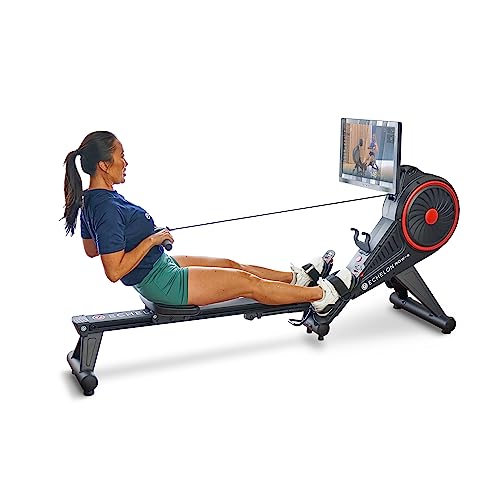
Echelon Row-S Smart Rower – I recommend the Echelon Row-S Smart Rower for users who want a connected fitness experience with a large rotating display at a much more affordable price than Hydrow.
MERACH Electromagnetic Rower – I recommend the MERACH electromagnetic rower for taller users and anyone who wants stronger specs, smoother resistance control, and better value in the mid-range category.
Sunny Health & Fitness Smart Silent Magnetic Rower – I recommend the Sunny smart magnetic rower for home users who want a quiet, stable, low-impact machine from a more established fitness brand without overspending.
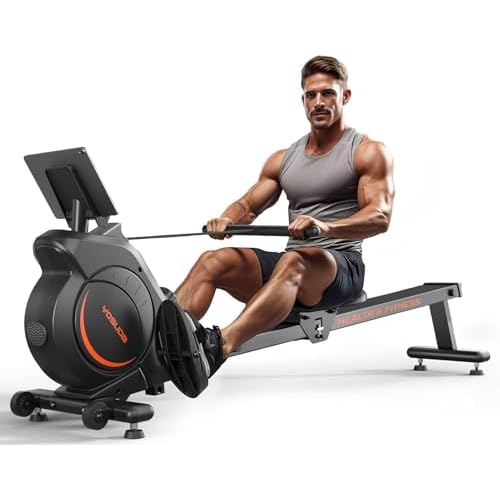
YOSUDA Magnetic Rowing Machine – I recommend the YOSUDA magnetic rower for beginners and budget shoppers who want the most affordable way to start rowing at home.
